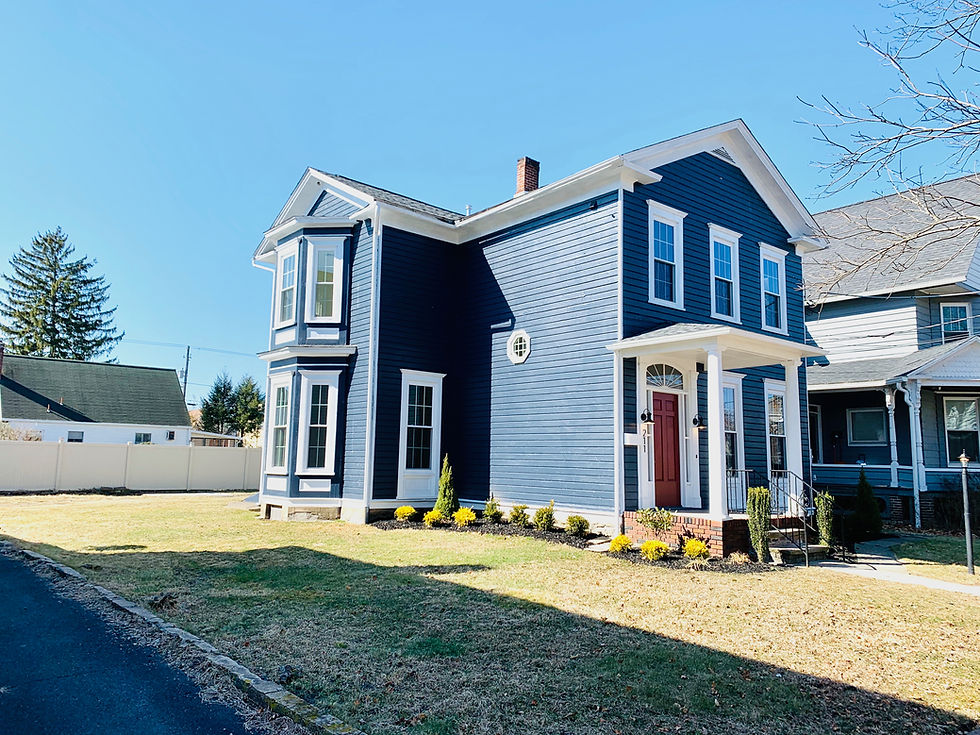
Make Old Homes Live Like New (Without Losing the Charm)
Updated: Jan 19
If you’ve ever fallen in love with a Pennsylvania home from the 1910s, 30s, or 50s, you already know the magic: thick trim, real wood doors, quirky staircases, glass doorknobs, maybe even a little stained glass tucked into a landing window. You also know the not-so-magical parts: drafty rooms, plaster cracks, sloped floors, and a kitchen that feels like it was designed before coffee makers existed.

At PA Renovations and Remodeling, we believe you don’t have to trade away character to get comfort. With the right plan, your old home can live like new—smoother, warmer, quieter—while keeping every ounce of the charm that made you want it in the first place.
This guide walks you through how we approach older Pennsylvania homes so you gain modern function without sanding off the soul.
First, Honor the Bones
Older homes have a rhythm: trim profiles that repeat from room to room, stair details that echo in door casings, plaster that softens light in a way drywall can’t quite copy. Before we touch a wall, we look for those patterns and decide what’s non-negotiable.
Keep: Original stair banisters, newel posts, window and door casings, hardwood flooring, built-ins, ceiling medallions, transoms.
Update: Wiring, plumbing, ventilation, insulation, weather sealing, and layout bottlenecks.
Blend: Where we must replace (e.g., a damaged section of casing), we match scale and profile so your eye reads it as original.
Field note: In a 1920s Scranton foursquare, the dining room had wavy plaster with hairline cracking. Instead of ripping it out, we stabilized and skimmed the plaster, then added new crown to match the width and reveal of the existing door headers. The room still looks like 1920s—just rested and refreshed.
Modern Comfort Starts Behind the Walls
You don’t notice great systems—you just notice your house is warm, quiet, and easy.
Electrical: Safe, Smart, and Future-Ready
Replace knob-and-tube and add grounded circuits.
Dedicated lines for kitchen appliances, baths, laundry, and HVAC.
Lighting plan that respects period style but adds layers (ambient + task + accent). Picture a classic pendant over the table, discreet canless LEDs for prep, and under-cabinet task light you’ll use every day.
Plumbing: Quiet, Clean, and Accessible
Update supply and drain lines (old galvanized can choke pressure).
Add shutoffs and cleanouts where future-you will thank you.
In baths, use modern valves and proper ventilation—historic houses hate trapped steam.
HVAC & Ventilation: Comfy Without Compromise
Right-size the system (no “bigger is better”).
Consider zoning for upstairs/downstairs comfort.
Add balanced ventilation where feasible; older homes appreciate consistent air changes.
Insulation and Air Sealing: Warmer Winters, Cooler Summers
Pennsylvania winters will find every gap. We tighten the shell without creating moisture traps.
Attic first. Air seal penetrations, then insulate to recommended R-values.
Walls: If original plaster is intact, we’re cautious about dense-packing—done wrong, it can create moisture issues. When we open walls for work, we insulate with the right vapor profile for the assembly.
Basement & Rim Joist: Air seal and insulate the rim/band joist—huge comfort boost.
Weatherstripping: New seals around doors and windows can change the whole feel of a room.
Mini win: A Cresco homeowner told us their front room was “the cold room.” We weatherstripped two original doors, sealed the rim joist, and added a floor register booster. Suddenly it was “the reading room.”
Windows: Repair, Retrofit, or Replace?
Original wood windows with storms can perform surprisingly well if maintained. But they also require care.
Repair/Retrofit: Tighten sash cords, tune hardware, add weatherstripping, and pair with low-profile interior or exterior storms. You keep the look, cut drafts, and improve comfort.
Hybrid approach: Retain street-facing windows for charm; replace back or side elevations where the style matters less.
Full replacement: If frames are gone or lead paint is failing, new windows make sense. We match grille patterns, sightlines, and trim profiles so replacements don’t feel like a time warp.
Floors That Tell a Story—Without Squeaks
That soft creak? It’s history talking—but a constant squeal at every step is a different story.
Re-fasten and re-support: From below, we add screws and strategic blocking to calm movement.
Refinish with respect: We sand cautiously, preserve board width and patina, and use finishes that work with old-growth wood.
Transitions that make sense: Tired thresholds and odd half-inch steps are trip hazards. We feather heights and use clean, period-appropriate trim.
Explore more on our Flooring & Finish Work page for how we refresh without erasing.
Kitchens & Baths: Today’s Function with Yesterday’s Charm
These rooms carry the biggest lifestyle upgrade—and the biggest risk of looking out of place if you go trendy-heavy.
Kitchens that Belong
Layout first: Fix the traffic jam between sink, range, and fridge. Consider an island if the room can breathe around it.
Cabinet style: Shaker, inset, or simple slab often pairs well with older trim.
Hardware & lighting: Classic shapes in warm metals, with discreet task lighting.
Countertops: Durable, timeless choices (wood, stone, or quality composite) that don’t shout “2025.”
Learn how we plan real-life kitchens on Kitchen Remodeling.
Baths that Age Well
Moisture is the villain: Ventilation, tile backer, waterproofing, and slope matter more than the vanity color.
Period nods: Hex or small-format floor tile, a gentle wall color, and a framed mirror can make a new bath feel native to the house.
Safety upgrades: Subtle grab blocking in walls for future bars, low-profile curbs, and slip-resistant tile.
Visit Bathroom Remodeling for space-savvy plans that feel calm, not cramped.
Walls: Plaster vs. Drywall (You Don’t Have to Choose)
We respect old plaster—its acoustics and shimmer are hard to fake.
Stabilize & skim where feasible to keep that soft light.
Smart replacements: In areas that are too far gone (or where we’ve opened for utilities), we transition to drywall with attention to reveal lines, corner bead type, and texture to blend old with new.
Trim reveals: We maintain consistent reveals around doors and windows so your eye reads one continuous language.
Built-Ins, Niches, and Those “Where Did You Find That?” Details
Older homes are filled with great architectural hideaways—linen closets tucked under stairs, milk doors, shallow niches. We restore or recreate them with modern purpose.
Mudroom built-ins that match existing trim profiles
Window seats with storage where radiators once lived
Shallow display shelves echoing original casing dimensions
Arched openings that mirror existing curves
These touches keep the remodel from feeling “dropped in” and make daily use easier. See more on Home Remodeling for how we integrate storage without visual clutter.
Exteriors: Where Durability Meets First Impressions
Pennsylvania weather tests the envelope. We plan details that shed water and stand up to freeze-thaw.
Flashing, flashing, flashing. Over doors, at ledger boards, along transitions—done right, it’s invisible insurance.
Gutters & grading: Direct water away from the foundation; add downspout extensions and regrade where needed.
Porch repairs: Replace rot with material that holds paint, match baluster spacing and handrail profiles, and secure newel posts to modern standards.
Deck tie-ins: If you’re adding outdoor living, we protect the original siding and structure with proper separation and waterproofing. Learn how we build for our climate on Decks & Patios.
Respecting History (and the Paperwork)
If you’re in a historic district or HOA, we’ll handle drawings, material specs, and approvals. Our goal is to speak the language of the home—and of the board reviewing your plans—so approvals go smoothly and the finished work looks meant-to-be.
Lead Paint, Asbestos, and “What’s in That Wall?”
Older homes can hide materials that require careful handling. We follow safe practices and bring the right partners when testing or abatement is needed. You’ll get straight talk and a clean, compliant process—no drama, no shortcuts.
Phasing the Work: Live at Home, Keep Your Sanity
You don’t have to do it all at once. In fact, phasing is often the smartest way to modernize without losing your mind.
Phase ideas we’ve used successfully:
Shell & Safety: Electrical, plumbing, roof leaks, insulation/air sealing.
Daily Life Upgrade: Kitchen or primary bath.
Circulation & Cohesion: Flooring, trim repairs, paint.
Wish List: Built-ins, mudroom, porch/deck, attic finish.
We sequence so you’re not living in a construction obstacle course. Learn how our scheduling keeps things steady on Home Remodeling and Painting & Drywall.
A Quick Story: Charm Kept, Life Upgraded
A Mount Pocono couple asked for “a kitchen that doesn’t fight us” and a wider doorway to the dining room—without losing the craftsman casing they loved.
What we did:
Removed a small section of wall, rebuilt the wider opening with matching casing (same head height, same reveal).
Reworked the kitchen layout so the fridge stopped blocking the range.
Tucked a paneled dishwasher next to a farmhouse sink and added a slim pull-out spice pantry.
Kept plaster on the dining room side, skimmed it smooth, and added a fixture that looks period-right but lights like a modern pendant.
Air sealed the attic hatch and weatherstripped the back door.
The house still looks like itself. It just works like it’s brand new.
Your Old-Home Smart Start Checklist
What features are non-negotiable to keep? (Trim, floors, windows, built-ins)
Where do comfort issues show up? (Drafts, uneven temps, noisy plumbing)
Which daily tasks are annoying? (Tight kitchen flow, no landing zone, poor lighting)
Are there known electrical/plumbing quirks? (Two-prong outlets, slow drains)
Any exterior water paths toward the house? (Downspouts, grading)
What can be phased to reduce disruption?
Bring your list. We’ll bring the tape measure, a calm plan, and options that respect the house and your routine.
Ready to Let Your Old Home Live Like New?
We’d love to help you map a remodel that protects the character you love and adds the comfort you’ve been missing. No rushed jobs, no hidden costs—just a people-first process and results that feel right on day one and year ten.
Explore Home Remodeling for whole-house planning that puts livability first.
See our approach to Painting & Drywall when plaster meets new work.
Plan a Kitchen Remodeling or Bathroom Remodeling update that fits your home’s language.
Thinking about a porch or deck refresh? Visit Decks & Patios.
Ready to talk? Contact us—we’ll listen, then build like it’s our own home.